


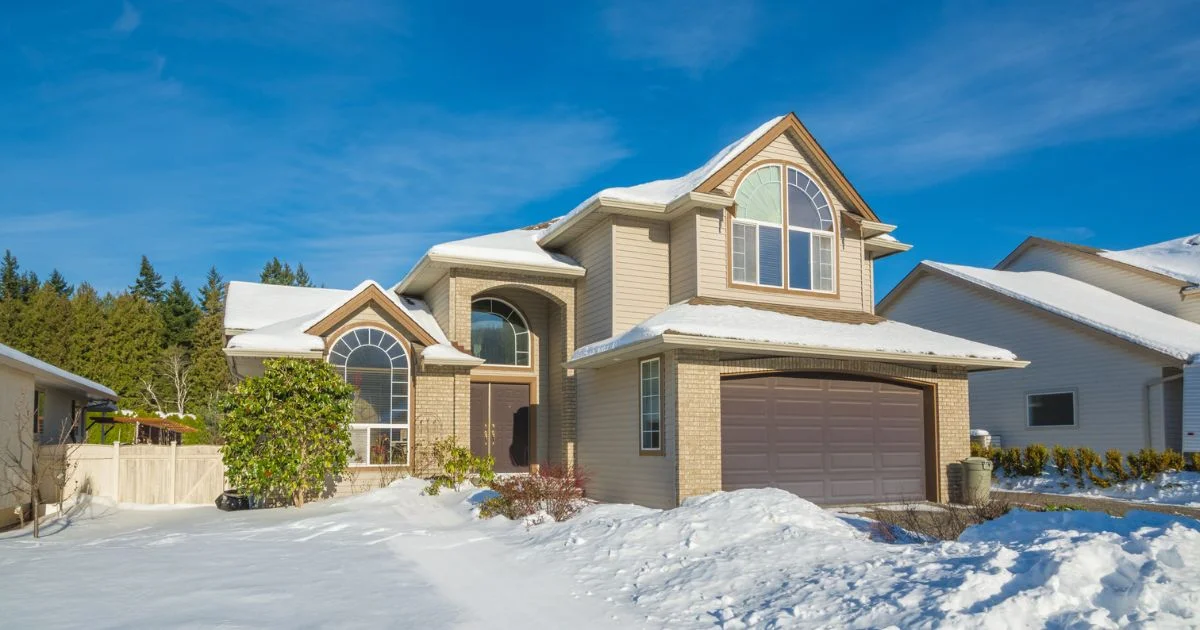
Your garage door is lying to you.
It promises to protect your home from Ontario's brutal weather, but that thin metal barrier might as well be a welcome mat for winter's worst. Meanwhile, the largest opening in your home sits there quietly leaking heat while your furnace works overtime.
Step into an uninsulated garage in January and you'll wonder if you accidentally wandered into a walk-in freezer. At up to 150 square feet – roughly the size of a small bedroom wall – that thin barrier between your home and -25°C winter nights might as well be a hole in your wallet if it's poorly insulated.
The sad reality is that most homeowners have no idea how much heat (and money) is escaping through their garage doors every winter. We've watched thousands of homeowners experience the same revelation: a properly insulated garage door transforms how their entire home feels and performs.
When -25°C Meets Your Garage Door
Winter in Ontario is relentlessly variable. One day it's -5°C with heavy, wet snow. The next brings -25°C temperatures with bone-dry air and howling winds. This constant fluctuation creates unique challenges that homes in Vancouver or Calgary simply don't face.
When temperatures drop below -20°C, the performance gap between insulated and uninsulated garage doors becomes dramatic. Heat escapes faster, cold penetrates deeper, and that bonus room above your garage becomes virtually unusable without cranking the heat.
But the problem goes beyond just comfort. Energy costs in Ontario have increased substantially highlighting why energy efficiency upgrades like insulated garage doors have become increasingly important for homeowners. An uninsulated garage door essentially forces you to heat the outdoors—something no homeowner wants to pay for.
The Numbers Don't Lie
Basic building science tells us that heat moves from warm areas to cold ones. What many homeowners don't realize is how quickly this happens through different materials.
A standard uninsulated metal garage door has an R-value of about R-0.5. That's worse than a single-pane window. By comparison:
Standard wall insulation: R-12 to R-20
Energy-efficient windows: R-3 to R-5
Insulated entry doors: R-5 to R-8
Properly insulated garage door: R-12 to R-18
This massive difference means heat transfers through your garage door up to 40 times faster than through your insulated walls. No wonder that room above the garage is always freezing! The garage doors we recommend for Ontario homes feature insulation values up to R-16, specifically engineered for our harsh winters.
A staggering 75% of your home's energy consumption goes to heating alone in Canadian winters. That's why homeowners are turning their attention to their home's complete thermal envelope—with garage doors emerging as a surprisingly critical component in the battle against energy waste.
Your Garage Door Affects Every Room (Surprised?)
The effects of a cold garage extend far beyond just the garage itself. That cold air becomes a thermal anchor, constantly pulling heat from adjacent living spaces.
Customers discover that upgrading their garage door insulation solved problems they never connected to their garage:
Bedrooms above garages suddenly maintaining comfortable temperatures.
Unexplained drafts in kitchens or family rooms disappearing.
Heating systems cycling less frequently.
Even moisture and condensation issues resolving in adjacent spaces.
We’ve had homeowners amazed that after 15 years of fighting with a cold office above their garage, a single door replacement made it comfortable enough to actually use the space year-round.
Natural Resources Canada's guide on home insulation specifically highlights attached garages as critical areas requiring proper thermal barriers to reduce heat loss and prevent garage fumes from entering living spaces.
Insulation Types: Making Smart Choices
Not all insulated garage doors offer equal performance, especially in Ontario's harsh conditions. There are two primary insulation types to consider:
Polystyrene (Styrofoam) Panels
These rigid foam boards are sandwiched between door panels:
Pros:
More affordable initial cost.
Lightweight construction.
Available in various thicknesses.
Cons:
Less effective in extreme cold.
Can develop gaps over time.
Typically, lower R-values (R-5 to R-10).
Polyurethane Foam Injection
This expanding foam fills the entire door cavity:
Pros:
Superior thermal performance (R-12 to R-18).
Adds structural strength to the door.
Creates a complete thermal envelope with no gaps.
Better sound dampening.
Cons:
Higher initial investment.
Slightly heavier door weight.
For most Ontario homes, polyurethane foam insulation delivers significantly better performance, especially during extended cold snaps when heat retention matters most. This is exactly why Garaga doors, which we offer, use polyurethane foam insulation to achieve up to R-16 insulation levels.
Beyond Heating: Other Benefits You'll Notice
While energy savings grab headlines, insulated garage doors deliver several other advantages that Ontario homeowners consistently appreciate:
1. Vehicle Protection
Ontario winters are notoriously hard on vehicles. An insulated garage provides better protection, particularly with the flexible bottom seals found in our premium doors that remain effective even in extreme cold:
Less battery strain (cold temperatures can reduce battery capacity by up to 50%).
Better fluid viscosity (prevents thickening of oils and lubricants).
Reduced moisture exposure (less rust and corrosion from road salt).
More reliable starting (fewer mornings wondering if your car will start).
2. Noise Reduction
Insulated doors substantially reduce sound transmission—both keeping outside noise out and garage noise in:
Traffic sounds noticeably reduced, often by several decibels.
Door operation noise minimized.
Less vibration and rattling.
Better privacy for garage activities.
3. Door Longevity
The construction methods used for insulated doors result in stronger, more durable products:
Reinforced construction resists denting and impact damage.
Better resistance to warping and panel separation.
Reduced wear on moving parts due to door rigidity.
Extended hardware life from reduced vibration.
4. Expanded Usability
A temperature-moderated garage opens new possibilities:
Workable space for DIY projects year-round.
Protected storage for temperature-sensitive items.
Transitional space that doesn't shock your system when entering or leaving.
Potential for conversion to living space.
Insulated garage doors significantly improve temperature regulation, keeping garages noticeably warmer in winter and cooler in summer compared to outside temperatures. This temperature buffer makes the space more functional year-round, even during Ontario's weather extremes.
Combining With Other Energy-Efficiency Upgrades
For maximum impact, consider combining your garage door insulation upgrade with other complementary improvements. This creates a complete thermal envelope for your home, helping prevent issues like ice dams while maximizing energy efficiency.
When paired with energy-efficient windows, proper attic insulation, and strategic weatherstripping, an insulated garage door completes your home's thermal defense system.
Many of our customers implement these upgrades in stages, often starting with the garage door because it delivers such noticeable immediate benefits. Others prefer a comprehensive approach, upgrading multiple components simultaneously to maximize contractor efficiency and rebate opportunities.
Government of Canada energy efficiency guidelines recommend insulating the common wall between the house and garage to the same level as exterior walls to reduce heat loss and improve overall home energy efficiency.
Signs Your Garage Door Needs an Insulation Upgrade
Not sure if your current door is underperforming? Watch for these telltale signs:
Dramatic temperature differences between your garage and adjacent rooms.
Frost or condensation forming on the inside surface of the door.
Rooms above or beside the garage consistently colder than other areas.
Door feels ice-cold to the touch during winter.
Energy bills spike during extreme weather periods.
Any of these symptoms suggest your door is allowing significant energy transfer—and costing you money every day.
The Installation Factor: Why It Matters
Even the best-insulated door won't perform properly without expert installation. Proper fitting ensures:
Complete perimeter sealing against air infiltration.
Correct balancing for the door's weight.
Proper adjustment of weatherstripping contact.
Appropriate hardware selection for Ontario conditions.
Professional installation typically adds only about 15-20% to the total project cost but dramatically impacts long-term performance and satisfaction.
Making the Right Investment
While insulated garage doors typically cost more upfront, the return on investment comes through:
Reduced energy costs.
Extended door lifespan with manufacturer's 10-Year Warranty protection (significantly longer than standard doors).
Increased comfort throughout adjacent living spaces.
Better protection for vehicles and stored items.
Potential qualification for energy efficiency rebates and incentives.
For most Ontario homeowners, these benefits typically offset the additional investment within 2-4 years, with comfort improvements noticed immediately. Our flexible financing options let you start saving on energy before you've finished paying for the door that's doing the saving.
Your Path to a Warmer, More Efficient Home
If you've recognized your garage door might be wasting energy, consider these steps:
Evaluate your current door's performance during extreme weather.
Consider how you use your garage and adjacent spaces.
Explore insulation options suited to Ontario's climate.
Factor in both initial costs and long-term savings.
Work with experienced professionals familiar with local conditions.
Your garage door shouldn't be your home's weak point against winter's assault. With proper insulation, it can instead become one of your strongest defenses—and one of your smartest investments. The right garage door saves you money and transforms how your entire home performs during Ontario's challenging weather.
Contact us for a free consultation to explore the best garage door insulation options for your specific home and needs.