

Check your upstairs rooms on a hot afternoon in July. If they're warmer than the main floor with the AC running, you're not alone. Two identical houses on the same street can have noticeably different hydro bills in August with the same square footage, same unit, same thermostat.
The difference is usually what's happening in the attic, and it has a direct line to what your cooling system pays to undo every evening. Your roof isn't just keeping rain out. It's either helping manage your summer AC bill or making it worse, depending on how well the ventilation and insulation underneath it is working together.
When Your Attic Becomes the Problem
On a typical Ontario summer afternoon, roof surface temperatures climb well above the air temperature outside, and that heat transfers directly into the attic space below.
Natural Resources Canada notes that proper attic ventilation reduces summer heat buildup and lowers air conditioner loads. Without it, the attic holds heat like a closed car in a parking lot, and it stays warm well into the evening.
That trapped attic heat radiates downward through your ceiling into the living space below, and your AC runs longer and harder to compensate. On a home spending $200 a month on cooling through July and August, even a 10–15% reduction means real money back over a summer, and that range is achievable with the right roof system doing its job.
Homes built in Kitchener-Waterloo through the 1980s and 90s are particularly prone to this. Many were insulated to the standards of the time, which were significantly lower than what the Ontario Building Code requires today.
The current minimum for attic insulation in Ontario is R-60. Thirty years ago, R-32 was acceptable. A home sitting at R-32 or below is working against itself every July and August, and most homeowners have no idea what their attic is actually running at.
Checking is straightforward. Pull down the attic hatch and look at the insulation depth against the framing. If you can see the tops of the joists, you're under R-40. If the insulation sits flush with or below the framing, you're likely well under R-32.
Either way, that gap between what's there and what current code requires is working against your AC every afternoon from June through September.
How Roof Ventilation Actually Works
Attic ventilation isn't complicated, but it has to be balanced to work. Cool air enters through soffit vents at the eave line. Hot air rises and exits through ridge vents or roof vents near the peak. That continuous airflow, what building scientists call the stack effect, keeps the attic from accumulating heat.
When it's functioning properly, attic temperatures stay within roughly 10–15°C of the outdoor air temperature on a hot day. When it isn't, that gap widens fast, and your living space feels it by mid-afternoon.
The failure mode that comes up regularly in older KW homes is blocked or inadequate soffit vents. Insulation gets pushed into the eaves over the years, sometimes during an upgrade, sometimes just from settling, and cuts off the intake side of the ventilation loop.
With no fresh air coming in at the bottom, the ridge vent at the top has nothing to draw from. The attic stagnates, heat builds, and your AC picks up the slack without you ever knowing why.
Baffles are the channels installed between roof rafters at the eave line, and they exist specifically to prevent this. They hold a clear airway above the insulation so soffit air can flow up and through.
If your home had an insulation top-up at any point without baffles being checked or installed, there's a reasonable chance the soffit vents are partially or fully blocked right now. It's one of the more common findings when a roofing assessment includes the attic, and it's also one of the easier things to correct.
The Insulation Side of the Equation
Ventilation moves heat out. Insulation slows it from getting in. But neither performs well without proper air sealing underneath, and that's the part most attics are missing. The R-value of your attic insulation measures its resistance to heat flow.
The higher the number, the harder heat has to work to get through. At R-60, which is what Ontario's building code now requires for new construction, the ceiling below stays significantly cooler than an attic running at R-32 or less. The difference shows up in your upstairs temperature and in how often your AC cycles on through the afternoon.
Gaps around light fixtures, plumbing penetrations, attic hatches, and electrical boxes let warm air bypass the insulation entirely, not slowly through the material but directly through the opening. You can have R-60 in your attic and still lose significant cooling efficiency if the ceiling plane underneath isn't sealed. Insulation needs a continuous surface to work against.
Without air sealing, you're slowing the heat in some places while it moves freely through others. If you check your attic hatch right now and see bare joists or insulation sitting below the top of the framing, you're likely well under the current recommended levels. That gap between what's there and what should be there shows up in your hydro bills every summer.
What Your Shingles Have to Do with It
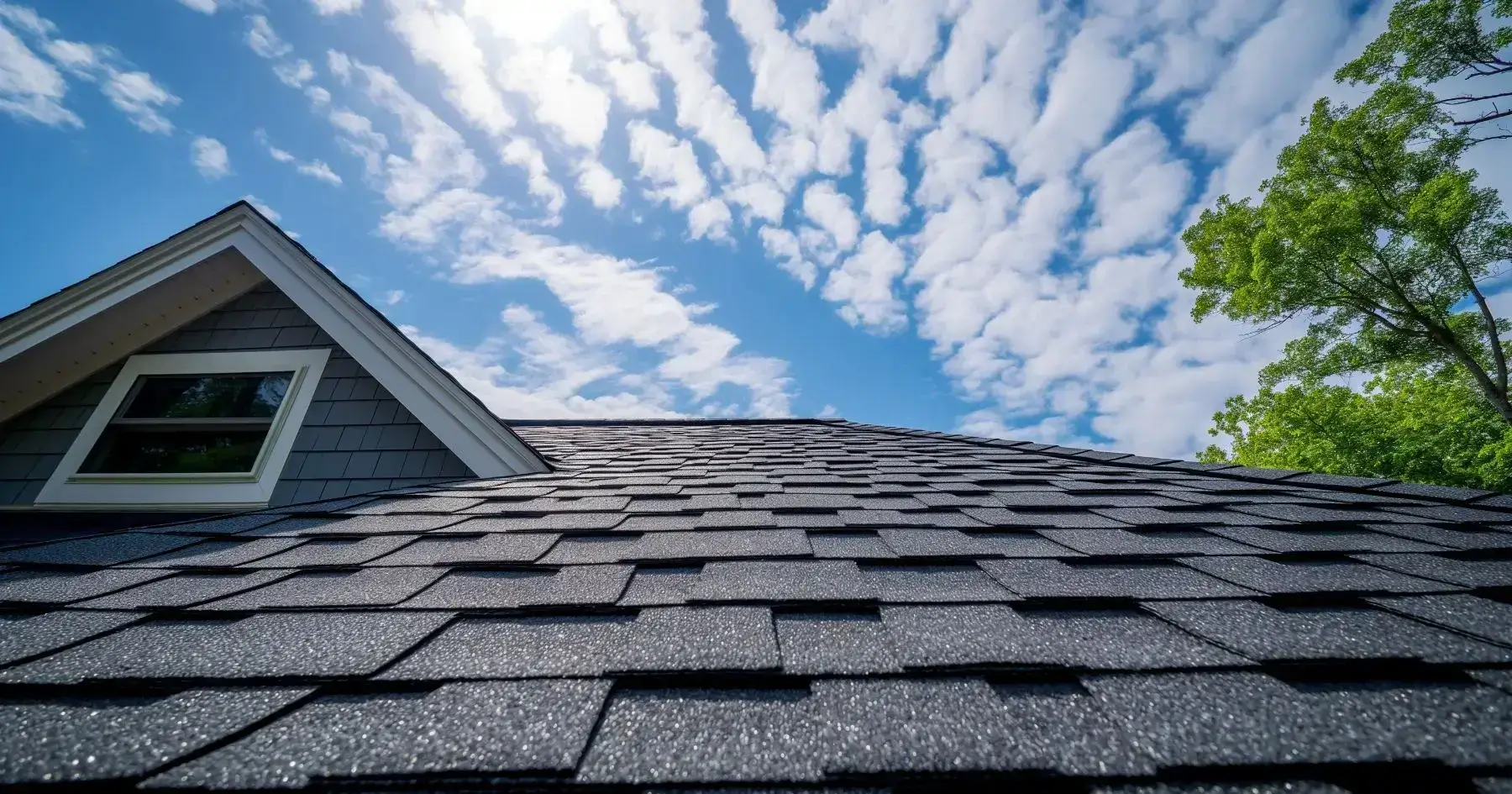
Shingle condition matters more than most homeowners factor in when thinking about summer heat. As shingles age, they lose their protective granule coating — those granules reflect a portion of solar radiation and protect the asphalt underneath from UV degradation.
A roof that's lost significant granule coverage absorbs and transfers more heat than one with intact shingles, in addition to being closer to the end of its functional life. If you've noticed granules collecting in your eavestroughs after rain, your shingles are telling you something about both their remaining lifespan and how much heat they're currently passing into your attic. Knowing the signs your roof needs an upgrade before summer peaks can save you from running a compromised system through the hottest months.
Granule loss tends to accelerate once it starts. The exposed asphalt underneath absorbs UV directly, which speeds up the breakdown of the shingle itself. A roof that looks serviceable from the driveway can be well into that cycle without any obvious visible cue beyond what's collecting in your gutters.
When a roof replacement is on the table, shingle colour is worth factoring into the conversation. Lighter tones reflect more solar radiation than dark ones, and over years of Ontario summers that difference adds up.
The Ventilation and Roofing Connection
A new roof is the right time to assess and correct the full ventilation system, not just replace shingles over whatever was there before. Ridge vent capacity, soffit vent coverage, baffle installation, and insulation levels all interact.
A professionally installed roof that leaves a compromised ventilation system underneath it is a missed opportunity that shows up in your hydro bills for years. Replacing shingles without checking soffit vent clearance, ridge vent sizing, or attic air sealing means the new roof performs the same as the old one from a cooling standpoint.
Materials and installation working together rather than just swapping components — that's what separates a roof replacement that improves performance from one that just looks new. It's also why a roofing assessment that looks at the full attic gives you more useful information than one that only evaluates shingles from the driveway.
The return on investment from a quality roof replacement gets discussed mostly in terms of curb appeal and resale value, but the energy performance side is just as real. A roof that meaningfully cuts your cooling costs every summer pays back in a way that shows up on your hydro bill, not just an appraisal.
Signs Your Roof System Is Working Against Your AC

A few things worth checking before the heat peaks. Upstairs rooms that stay warmer than the main floor with the AC running are the clearest signal. The ceiling below the attic absorbs radiant heat and transfers it down faster than the cooling system can pull it out.
In a two-storey home, that shows up as a persistent temperature gap between floors that no thermostat adjustment fixes. If you've been managing it with a portable unit in the bedroom, that's a symptom, not a solution. Cooling bills that creep up each summer without any change in usage are worth paying attention to.
Rate increases explain some of it, but a roof system that's gradually degrading explains more: granule loss on aging shingles, insulation that's settled and thinned over decades, soffit vents getting progressively more obstructed. The connection between ice dams in winter and inadequate attic ventilation is the same ventilation problem showing up in a different season.
Most KW homes in established neighbourhoods haven't had anyone look at baffle installation, soffit vent clearance, or actual insulation depth since they were built. For a home that's 30 or 40 years old, that's a long time for things to shift without anyone noticing.
A roofing assessment that includes the attic takes the guesswork out of it. Rick MacDonald offers free estimates across Kitchener-Waterloo, Cambridge, and Guelph. If your upstairs is running hot this summer, it's worth finding out why before next July.