

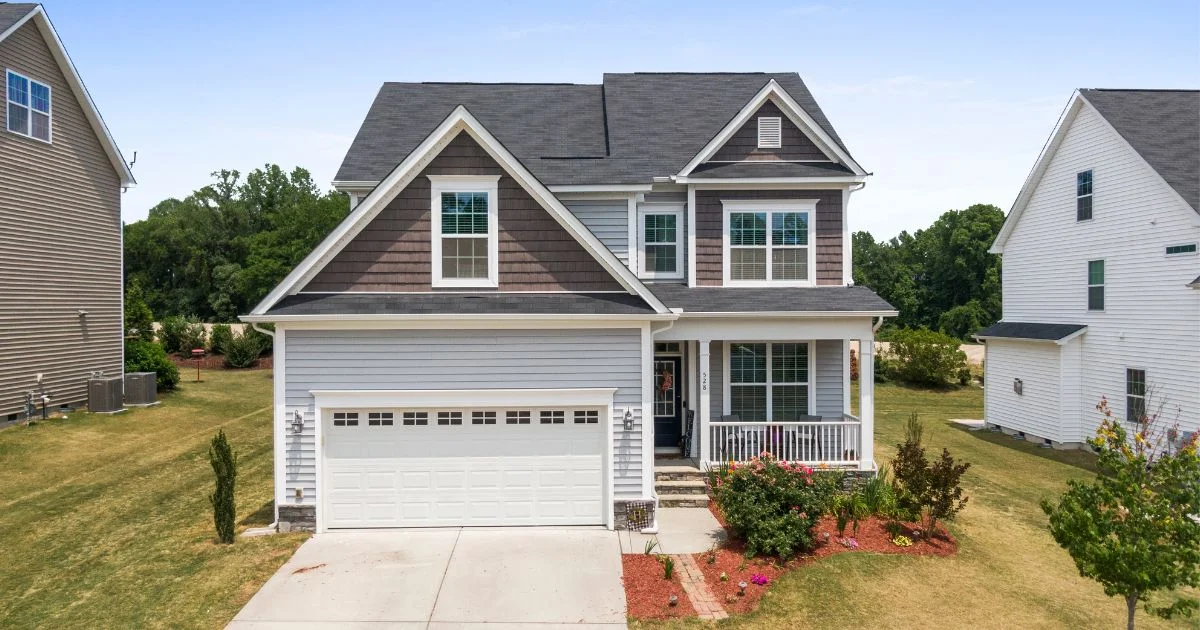
The listing photos came back and the house looked fine — clean lines, tidy yard, fresh paint on the door. The agent flagged the siding before the first showing. Not because it was damaged but because it had faded to that particular grey that vinyl gets after fifteen years in Ontario sun.
In a market where buyers are already nervous about what they can't see, dated siding reads as deferred maintenance even when it isn't. That's the thing about siding and resale value. The question isn't really "does vinyl help or hurt?" It's whether the siding you have, or the siding you're considering, looks like someone took care of this house.
Buyers make that call in under ten seconds on the driveway, before they've seen a single room. The material has been around long enough to have a real track record in Canadian markets, and the answer it produces depends almost entirely on condition, colour, and installation quality. Not on the fact that it's vinyl.
What the Resale Data Actually Shows
The Appraisal Institute of Canada hasn't published a definitive national number on siding ROI, and you'll find a range of figures from different renovation cost reports. What holds across most of them: new siding in good condition tends to return a meaningful portion of its cost on resale, depending on the market, the home's price point, and what comparable homes in the area look like.
For Kitchener-Waterloo specifically, that context matters. KW buyers compare what they're looking at against the neighbourhood standard. If every house on the street has been re-sided in the last decade and yours hasn't, the siding problem isn't the material. It's the gap between your home and the comps.
New vinyl siding doesn't add value the way a kitchen renovation might. What it does is remove a discount. A buyer looking at weathered, chalky, or cracked siding is already mentally subtracting: for the repair, for the unknown behind the siding, for the fact that they can't tell what else wasn't maintained. New siding eliminates that math. That's the ROI. Not gaining ground but not losing it.
Where Vinyl Gets Penalized at Appraisal
There are situations where vinyl does work against you. Not because appraisers or buyers dislike the material, but because of how specific conditions present.
Colour is the most common one. A strongly personal colour choice on a higher-end home narrows your buyer pool. That's not vinyl's fault, but vinyl shows colour choices more visibly than brick or stone, and it's harder to change your mind. Neutral tones, grey, greige, charcoal, soft white, consistently outperform on resale because they don't require the buyer to love what you chose.
Fading and chalking are the other issue. Cheaper vinyl products fade unevenly within ten to twelve years under Ontario sun exposure, and south- and west-facing elevations go first. By the time a home hits the market, that fading reads as age, and age reads as risk to a buyer who isn't sure what else might be due.
Quality vinyl holds its colour significantly longer. The difference between a mid-grade and a premium product shows up most obviously at year twelve, which is often right when someone is thinking about selling.
The third problem is poor installation. Vinyl that was installed without a proper house wrap, with gaps at the J-channel, or without accounting for thermal expansion looks fine for years while moisture works behind it. By the time it's visible, bubbling, pulling away from corners, soft spots near windows, the repair cost isn't just siding. It's what's behind the siding.
The Condition Question Buyers Are Actually Asking
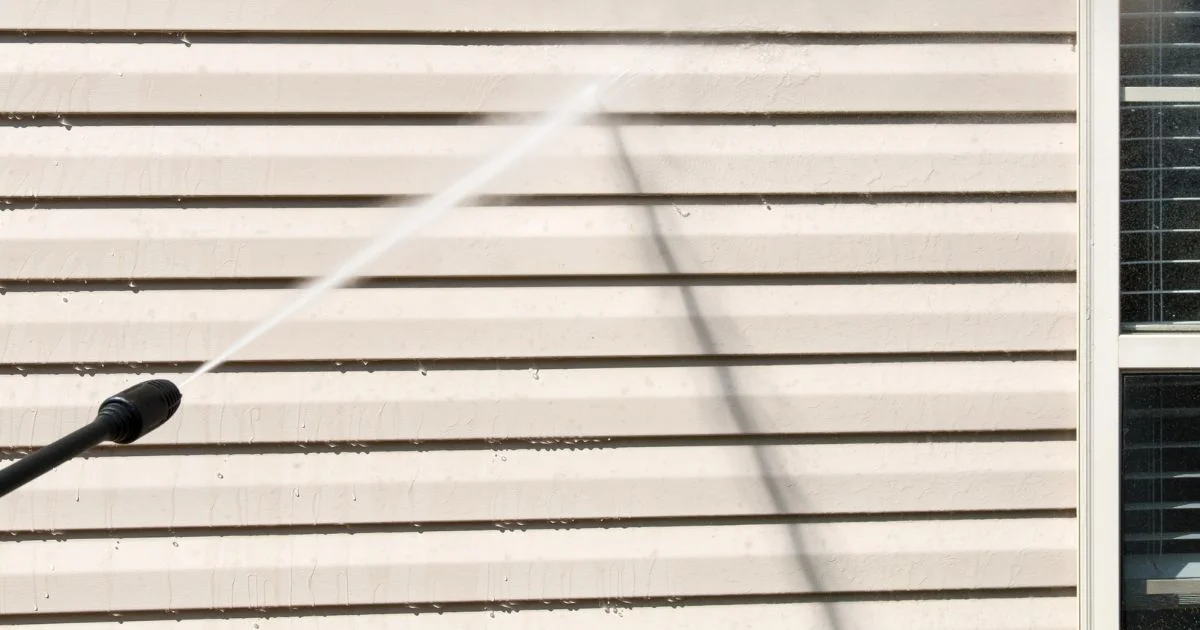
When a buyer looks at siding, they're not evaluating the material. They're not thinking about R-values or thermal expansion or what happens to vinyl in a freeze-thaw cycle. They're trying to answer one question: what did this owner do when something needed attention?
Siding in good condition, clean, tight, consistent colour, no visible damage at the trim or corners, communicates a maintained home. It's the exterior equivalent of a clean furnace filter. Nobody celebrates it, but its absence gets noticed immediately.
Siding with visible problems does the opposite. It signals either that the owner didn't notice or didn't care, and neither answer is reassuring when you're about to hand over a few hundred thousand dollars.
For signs your home's siding needs replacement, the ones that show up at resale, chalking, cracking, visible gaps at corners, aren't always the worst from a structural standpoint. They're the ones that show in listing photos and through a windshield.
That's the maintenance signal buyers are reading. Not the material spec sheet. And it applies regardless of what the siding is made of — vinyl, fibre cement, wood, or aluminum all get assessed the same way. Condition first, material second.
When Replacing Before Listing Makes Financial Sense
The calculation changes depending on what you're working with. A fifteen-year-old vinyl installation that's still tight, clean, and neutral-coloured may not need replacing before a sale. It looks cared-for, and buyers in the KW market understand what fifteen-year-old siding looks like when it's been maintained.
A twenty-year-old installation with visible fading and a colour the market has moved past is a different situation. In that case, a buyer's agent will flag it, the home inspector will photograph it, and the negotiation will use it, often for more than the replacement would have cost.
The cost of re-siding a typical KW home varies depending on size, product grade, and what's found underneath. That range widens if the sheathing needs attention or if the old installation created moisture problems that weren't caught until the siding came off.
If that cost comes back as a negotiated price reduction plus carrying costs on a home that sits longer because the exterior undercut the showing, the math shifts. It's not a guaranteed return. It's a risk calculation, and the starting condition of what you have determines which side of the line you're on.
For a full breakdown of what goes into siding replacement cost in Ontario, the variables are worth understanding before a listing decision.
What Buyers in the KW Market Are Looking For
Kitchener-Waterloo has a mix of housing stock that doesn't exist in a lot of markets. Century homes in older neighbourhoods, postwar bungalows, 1980s and 90s subdivisions, and newer builds all sit within a few kilometres of each other. Buyer expectations shift with the neighbourhood.
In older KW neighbourhoods, exterior authenticity matters more. A century home re-sided in textured vinyl that mimics wood shakes or clapboard usually performs better than one with standard horizontal vinyl. Not because it's more durable, but because it reads as consistent with what the street looks like.
Buyers who want a century home are often buying the neighbourhood's character alongside the square footage. In newer suburban builds, the comps matter more than character.
If the standard on the street is smooth horizontal vinyl in a neutral tone and you've got the same thing in good condition, you're competitive. If you've got the same product in a faded colonial blue from 2003, you're not.
The material isn't the deciding variable. What it looks like relative to what buyers expect on that street is.
The Installation Detail Nobody Mentions at Listing Time
One thing that consistently doesn't come up until it must: the installation behind the siding matters to resale value just as much as the siding itself.
Vinyl installed over old aluminum without removing it, or over deteriorated sheathing without addressing the moisture, presents a different risk profile than a clean installation over a proper house wrap. The home inspector won't be able to see what's underneath. But they'll note anything that suggests moisture, and once that's in the report, buyers use it.
CMHC’s guidance on moisture control in Canadian homes is consistent on this point: keeping the wall assembly dry is a maintenance issue, not just a construction one. A proper vinyl installation includes removing the old material, inspecting, and addressing the sheathing, and installing a quality house wrap as a moisture barrier.
Natural Resources Canada's insulation and house wrap guide covers why that air and vapour barrier layer matters to the whole wall's long-term performance — it's not just about keeping water out on day one. For choosing siding that performs in Canadian climate conditions, the installation method determines longevity as much as the product grade does.
What that means for resale: a well-installed vinyl system, documented and clearly maintained, is a neutral-to-positive factor. An unknown installation from fifteen years ago, no records, no permit, visible irregularities at the trim, is a discount waiting to happen.
The Honest Answer to the Question
Vinyl siding doesn't help or hurt your home's resale value on its own. Condition does. Colour does. Installation quality does. The comparison to what's standard in your neighbourhood does.
In most KW resale situations, vinyl siding in good condition and a market-appropriate colour is competitive with any other cladding material at a comparable price point. It's not a liability. It's not a premium either. It's assessed the same way any other exterior finish gets assessed: does this look like someone took care of it?
Rick MacDonald offers free estimates across Kitchener-Waterloo, Cambridge, and Guelph. If you're weighing a siding replacement before listing, get an assessment while you still have options — before the listing timeline makes the decision for you.