


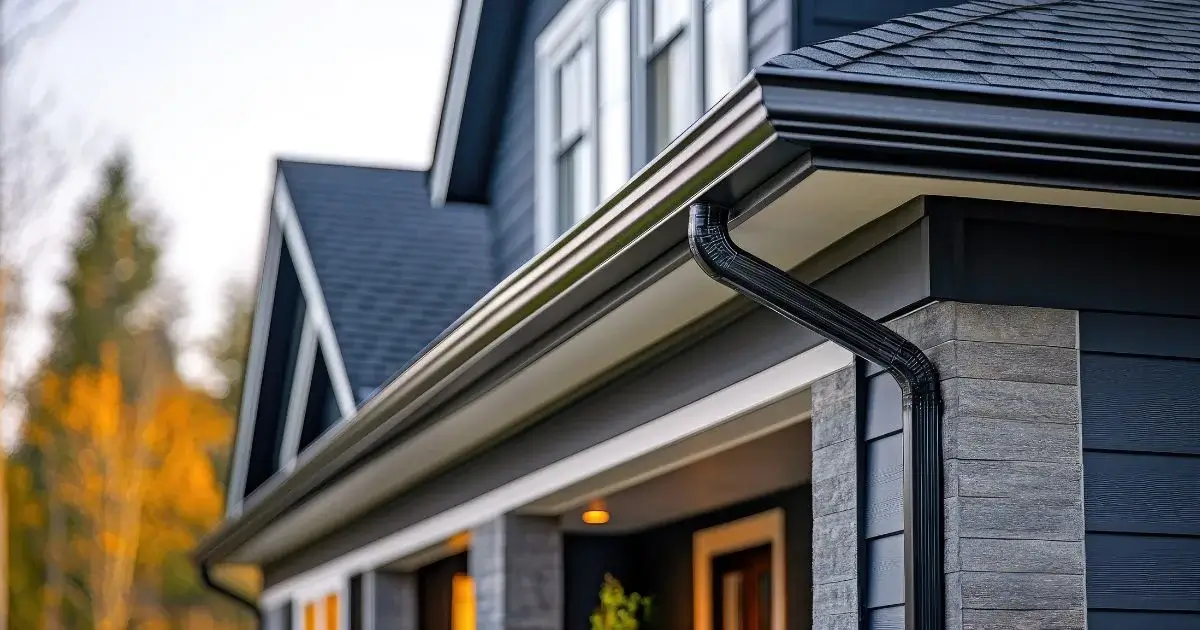
You clean your eavestroughs twice a year. By November, they're full of maple keys and shingle granules again. The downspouts overflow during heavy rain, water pools near the foundation, and you're back on the ladder with gloves and a garbage bag wondering if there's a better way.
Guard systems promise to solve this, but the options contradict each other. Mesh guards that freeze solid in January. Screen systems that let debris through. Solid covers that work until an ice dam forms behind them.
Each one claims to be the answer, and each one fails in a unique way depending on your roof pitch, tree coverage, and how much water your roof sheds during a KW thunderstorm.
The right system isn't about finding the best product. It's about matching the guard type to your specific conditions, how many freeze-thaw cycles hit your neighbourhood, and whether your downspouts can handle the volume.
Why Eavestrough Size Matters Before You Pick a Guard
Most KW homes have 5-inch K-style eavestroughs. They handle typical rainfall fine until you add a steep roof pitch or a large drainage area, then they overflow even when clean. A guard system won't fix undersized eavestroughs.
Roof area determines how much water your eavestroughs need to move. A bungalow with a gentle pitch might be fine with 5-inch. A two-storey with a 9:12 pitch sheds water faster than a 5-inch trough can drain it, especially at inside corners where two roof planes meet.
That's where you see overflow during heavy rain, and that's where adding a guard makes it worse if the sizing wasn't right to begin with.
Government of Canada recommends installing downspouts to carry water at least two metres from your foundation to prevent basement flooding.
That only works if the eavestrough can get water to the downspout without overflowing first.
When an eavestrough runs twenty metres between downspouts, the volume builds. If the trough is already at capacity during a storm, any restriction from a guard system sends water over the edge instead of toward the drain.
Homes built in KW before 1980 - particularly in older Waterloo neighborhoods near Uptown and established areas of east Kitchener - may have undersized systems trying to handle modern roof runoff volumes. Upgrading to 6-inch before adding guards gives you capacity that compensates for the slight flow restriction most guard systems create.
How Guard Systems Actually Work in Ontario Winters
Guard systems fall into three categories based on how they handle debris and ice. Mesh guards, screen guards, and solid covers with surface tension slots. Each one works in specific conditions and fails in others.
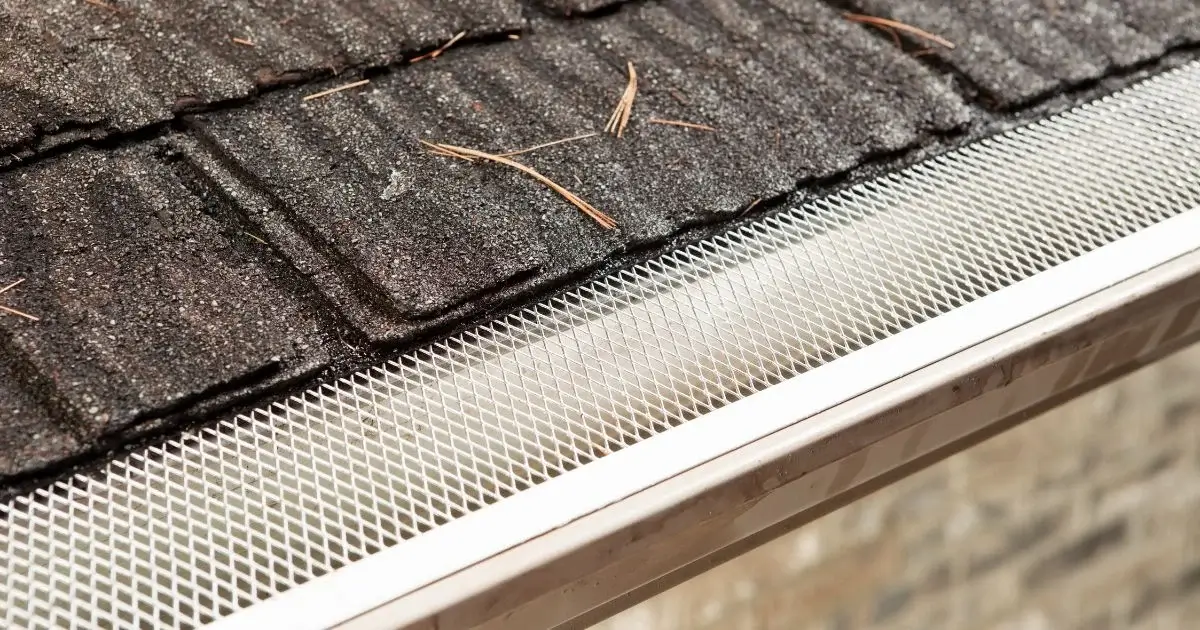
Mesh guards use fine metal screening to block debris while letting water through. They handle small particles well until the first hard freeze. Here's what happens: November rain soaks the mesh, temperatures drop overnight, and by morning you've got a sheet of ice blocking the entire system.
The mesh that was supposed to protect your eavestroughs just became a frozen shelf forcing water over the edge. That's the moment most homeowners realize the system they installed in September won't survive a KW winter.
Screen guards use larger openings, typically half-inch spacing. Leaves and larger debris sit on top, dry out, and blow off. Smaller material gets through and settles in the trough, which means you're still cleaning, just less often. They don't freeze as easily as mesh because water drains through faster, but they also don't stop the fine debris that eventually builds up.
Solid covers like the Alu-Rex system work on surface tension. Water follows the curved surface into a slot at the front edge while debris slides off. They handle Ontario freeze-thaw cycles better because ice forms on top of the cover instead of blocking the water path.
The T-Rex continuous hanger that comes with Alu-Rex adds structural support that matters when ice loads hit in January. No system eliminates maintenance completely. The question isn't whether gutter guards are a good investment - it's whether the system matches your specific conditions.
What Your Roof Pitch and Tree Coverage Tell You
Steep roofs shed water fast. Gentle slopes let water sit. That difference determines which guard type works.
A roof with an 8:12 pitch or steeper sends water down at speed. Mesh guards can't process that volume quickly enough during heavy rain, especially when multiple roof planes converge at a valley. Water shoots over the top instead of filtering through. Solid surface tension systems handle high-velocity water better because they're designed to catch fast-moving runoff and redirect it into the slot.
Gentle slopes under 6:12 give water time to drain through mesh without overwhelming it. Screen systems work here too since the slower flow rate lets debris dry and blow off before it clogs the openings.
Tree coverage within ten metres of your roofline changes the equation. Maples drop keys in spring and leaves in fall. Pines shed needles year-round.
If you're under tree cover, you need a system that either blocks everything (solid covers) or lets everything through (screens). Mesh catches some debris, lets some through, and freezes when wet material sits on the surface.
Homes with minimal tree cover deal mostly with shingle granules and airborne debris. That fine material eventually gets into any system, but the volume is low enough that annual cleaning handles it. In those conditions, the decision comes down to ice management rather than debris blocking.
When Ice Dams Complicate Your Eavestrough Choice
Ice dams form when heat escapes through your roof deck, melts snow, and the melt refreezes at the cold eave. The ice builds up behind the dam and forces water under your shingles. Eavestrough systems don't cause ice dams, but they can make the consequences worse if the system traps water instead of draining it.
Understanding how ice dams form helps you see why certain guard systems handle them better. Mesh guards freeze first because water sitting on the surface has nowhere to go when temperatures drop. That creates a barrier that forces subsequent melt to back up behind it.
Solid covers handle this better. Ice forms on top of the cover, but water can still drain through the front slot. The T-Rex system's continuous hanger means the eavestrough stays attached even when ice weight builds up, which matters more than most homeowners realize until a section drops.
The CSA Group's basement flood protection guidelines emphasize proper drainage as part of comprehensive water management. When ice blocks your eavestroughs and forces overflow directly against your foundation, you're bypassing the entire drainage system your home depends on.
How Installation Quality Changes Which Systems Work
Guard systems only work when they're installed correctly. Solid covers need to sit at the right angle, so water follows the curve into the slot instead of shooting over it. Mesh systems need tension across the surface, so material doesn't sag. Screen guards need to overlap properly at seams or leaves get through the gaps.
Rick MacDonald's installation warranty covers the eavestrough system and whatever guard type you choose. That means if ice pulls a section loose or installation clearances weren't right and debris gets through; the fix doesn't cost you.
After 50 years of installing Alu-Rex, T-Rex, and other guard systems across KW, the pattern is clear: proper installation spacing, correct pitch angles, and secure fastening determine whether a system works or fails.
What Downspout Placement Has to Do with Guard Performance
You can install the best guard system available and still have water pooling at your foundation if the downspouts discharge too close to the house. Proper foundation maintenance requires downspouts to carry water far enough from basement walls that it doesn't seep back through foundation cracks.
One downspout per six to twelve metres of eavestrough is standard, but that assumes level ground and good drainage. If water sits near your foundation after rain, adding more downspouts helps more than upgrading to a better guard system.
Downspout extensions need to carry water at least two metres away, preferably onto a sloped lawn or into a rain garden. Splash blocks help but they're not enough if the ground slopes back toward the house.
Which System Actually Works for KW Homes
For homes under heavy tree cover, solid surface tension covers like Alu-Rex handle the debris volume and ice cycles best. The upfront cost runs higher, but the maintenance reduction justifies it when you're dealing with mature trees within ten metres of the roofline.
Homes with minimal tree coverage and gentle roof slopes can use screen guards successfully. They freeze less than mesh, cost less than solid covers, and don't restrict flow on properly sized eavestroughs.
Mesh systems work in narrow conditions - gentle slopes, minimal trees, and climates that don't freeze as hard as KW winters. For most KW homes, mesh creates more winter maintenance than it saves during fall cleaning.
The right system depends on your roof pitch, tree coverage, eavestrough size, and downspout discharge. An assessment identifies whether the current system is sized correctly before recommending which guard type fits.
Rick MacDonald installs Alu-Rex and T-Rex guard systems alongside 5-inch and 6-inch K-style eavestroughs across Kitchener-Waterloo, Cambridge, and Guelph. An assessment identifies whether your overflow stems from undersized eavestroughs, poor downspout spacing, or the wrong guard type before recommending the right system. Contact us for a free estimate.